

Latest
Press Release
26 October 2026
Readout of the Secretary-General’s meeting with H.E. Mr. Nabil Fahmy, Secretary-General of the League of Arab States
Learn more
Press Release
23 October 2026
THE SECRETARY-GENERAL -- MESSAGE FOR UNITED NATIONS DAY 24 October 2026
Learn more
Press Release
22 October 2026
Full Transcript of Secretary-General’s Press Encounter
Learn more
Latest
The Sustainable Development Goals in Egypt
The Sustainable Development Goals are a global call to action to end poverty, protect the earth’s environment and climate, and ensure that people everywhere can enjoy peace and prosperity. These are the goals the UN is working on in Egypt:
Story
09 October 2026
UN Egypt’s Rampolla Congratulates Former UN High Commissioner for Human Rights on Nobel Peace Prize
The United Nations Resident Coordinator in Egypt, Gianluca Rampolla, congratulated former United Nations High Commissioner for Human Rights Navi Pillay on being awarded the 2026 Nobel Peace Prize.Commenting on the South African human rights advocate's award, the top UN official in Egypt stated that "peace is not merely the absence of conflict; it is the presence of justice, dignity, and equal opportunity."The UN Resident Coordinator in Egypt said that Ms. Pillay's Nobel Peace Prize is a powerful reminder of the values that guide the United Nations' work with Egypt: leaving no one behind. The South African jurist and human rights advocate, who also chaired the United Nations Independent International Commission of Inquiry on the Occupied Palestinian Territory, including East Jerusalem, and Israel, was honored for her efforts to promote peace and international law.The Norwegian Nobel Committee said that the award was going “to a person who with exceptional courage and integrity has led the way towards a more comprehensive global legal order,” noting that she “has been instrumental in ensuring that war crimes, crimes against humanity and genocide are prosecuted.”In a statement congratulating the new Nobel laureate, UN Secretary-General António Guterres said Ms. Pillay has shown “that the force of law must prevail over the law of force and that defending human rights is the surest safeguard against injustice.”He hailed her as “a champion of international law and human rights, and a steadfast, independent voice of justice”, adding that “in its citation, the Nobel Committee reminded the world that peace must be built on lasting principles, not the will of the powerful."On receiving the news of Ms. Pillay's honour, the current UN human rights chief, Volker Türk, warmly congratulated the woman he described as a big sister. “To say it is well deserved is a total understatement, and especially at a time when human rights are under attack on so many fronts, including from those who wield enormous power, this award is particularly poignant,” he said, speaking in Geneva.“It is an award to all those who around the world dedicate their lives to the defense of human rights, often at great risk to their security.”
1 of 3

Story
12 August 2025
Panova: New National Youth and Sports Strategy Reflects Egypt’s Commitment to Sport as Driver of Development
The United Nations Resident Coordinator in Egypt, Elena Panova, said that the launch of the National Youth and Sports Strategy by Egypt’s Ministry of Youth and Sports reflects the government’s commitment to sport “as a cultural force and as a driver of national development, and as a catalyst for empowerment, inclusion, and opportunity.”The statement came during the launch of the National Youth and Sports Strategy (2025–2032) at a ceremony held in the New Administrative Capital under the patronage of Prime Minister Mostafa Madbouly, in partnership with the United Nations system in Egypt, and coinciding with the celebration of International Youth Day on August 12. During the event, Minister of Youth and Sports Dr. Ashraf Sobhy presented the new strategy, which aims to promote youth and sports development through investment in human capital, supporting smart economic contributions, and achieving sustainable development. In her address to an audience that included young participants; Minister of Education and Technical Education Mohamed Abdel Latif; Amal Ammar, President of the National Council for Women; UNFPA Representative in Egypt Yves Sassenrath; UNICEF Representative in Egypt Natalia Winder Rossi; and other representatives from ministries, UN agencies, and government entities, Panova said:“In Egypt, sport is a source of unity, identity, and ambition. Egypt’s new strategy embraces this reality. It positions sport both as a cultural force and as a driver of national development… This is a statement of intent that Egypt sees its young people, not only as the promise of tomorrow, but already as active contributors to the progress of today.” Noting that nearly 60% of Egypt’s population is under the age of 30, Panova said the country has “a huge demographic potential” and with it “a responsibility to ensure every young person has the chance to learn, to work, and to thrive… One powerful way to unlock that potential is through sport as a catalyst for empowerment, inclusion, and opportunity.”She highlighted that the strategy’s distinguishing feature is the way it was developed — through “a truly national conversation led by the Ministry of Youth and Sports: over 21 workshops in 11 cities, more than 10,000 young people surveyed, and over 400 concrete measures proposed.” “This is policy made with youth, not just for youth. It builds on the strong partnership between the United Nations and the Government of Egypt to make sure young people’s voices are not only heard but acted upon,” Panova said.She pointed to the UN’s belief that meaningful, diverse, and effective youth participation — inside the UN and beyond — is essential to achieving the Sustainable Development Goals. Panova referred to the Shabab Balad initiative, through which Egypt is part of the UN’s global Generation Unlimited movement to connect every young person to education, employment, and empowerment; and the UN in Egypt’s Youth Advisory Board, which ensures that young women and men contribute to shaping UN strategies, programmes, and decisions at every level. Panova said the UN’s priorities for youth — including skills development, decent work, civic engagement, and digital innovation — are closely aligned with Egypt’s national vision for its young people. She cited tangible results from joint work, noting that “in 2024 alone, more than 364,000 people — most of them young — gained new skills through UN-supported programmes.” She added that community coach initiatives are empowering young women to become local champions in sport and social innovation, while across Egypt, young entrepreneurs are leading green growth projects ranging from agribusiness to smart green ventures. Panova reaffirmed the UN’s commitment to working “for and with” young people, ensuring that collective actions are guided by their perspectives and energy. For his part, Yves Sassenrath, UNFPA Representative in Egypt, said: “Youth are not a side agenda; they are the agenda. UNFPA is proud to support Egypt’s new National Youth and Sports Strategy, shaped by more than 10,000 young voices—this is their platform for leadership. UNFPA is also proud to work hand in hand with the Government of Egypt in its efforts to ensure that every young woman and man has the skills, health, and rights that enable them to lead change.”UNICEF Representative in Egypt and Co-Chair of the UN Egypt Youth Taskforce, Natalia Winder Rossi, said: "Real change starts close to home—in classrooms, playgrounds, and communities where young people shape the future. Egypt’s new strategy puts youth at the heart of progress, and the UN stands with them every step of the way."The new strategy is built on four main pillars: the comprehensive development of youth and adolescents; promoting sport as a lifestyle; developing competitive sports and creativity; and improving governance in the youth and sports sectors.
1 of 3

Story
02 July 2025
UN's Panova says Egypt deeply committed to placing food systems, food security, and nutrition at heart of national development priorities
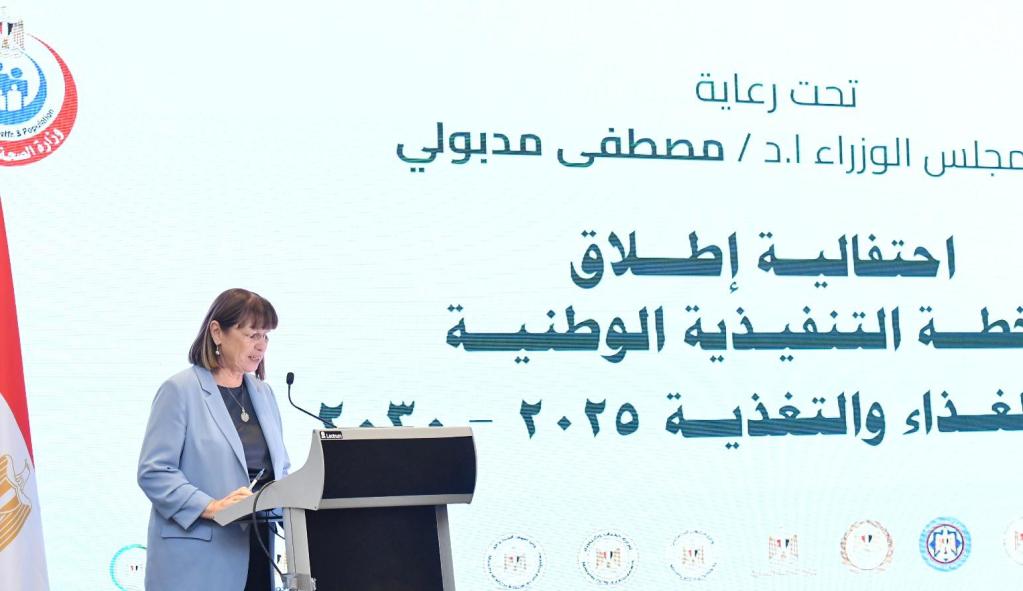
Elena Panova, the United Nations Resident Coordinator in Egypt, stated that the launch of the National Operational Plan for Food and Nutrition Systems 2025–2030 and the Roadmap to Accelerate Anemia Reduction in Egypt reflects the country's deep and sustained commitment to putting food systems, food security, and nutrition at the core of its human capital development agenda—and making them an essential component of its national development priorities.In a speech delivered on behalf of the United Nations Country Team in Egypt, Panova described the National Operational Plan as a transformational, evidence-based, multisectoral effort. She emphasized that transforming food systems and improving nutrition outcomes is a shared national endeavor requiring broad collaboration across sectors to maximize impact. Panova noted that the launch follows a series of major national strategies and investments, including Egypt’s National Food and Nutrition Strategy (2022–2030), the recently launched National Stunting and Malnutrition Prevention Program, the Takaful and Karama Program, the “First 1,000 Days” initiative, and the Egyptian Code of Marketing Breastmilk Substitutes and Baby-Friendly Health Facility accreditation. She called these programs “clear expressions of Egypt’s progress and ambition.”She described the Anemia Reduction Roadmap as a wise investment for Egypt, noting that every $1 invested in reducing anemia could generate up to $12 in economic returns. The roadmap, she added, will improve the health of pregnant women and their children and could also enhance academic performance among students.“We view both the National Operational Plan for Food and Nutrition Systems and the Roadmap to Accelerate Anemia Reduction not only as means to improve food and nutrition security but as levers for broader social and economic outcomes,” Panova said. "Economic prosperity, social cohesion, and national resilience begin with a food ecosystem that is not only nutrition-sensitive but also addresses inequities and reduces gaps by reaching the most vulnerable population groups, including women, children, the elderly, and others,” she added.Panova presented four critical enablers to ensure the successful implementation of the plan:Strong multisectoral coordination mechanisms to ensure alignment and convergence across all sectors and systems—health, agriculture, education, and social protection.Robust accountability and monitoring frameworks to track progress, promote transparency, and drive continuous improvement.Investment in data systems and evidence generation, enabling timely and informed policy decisions and effective scaling of successful approaches.Sustainable financing and capacity development, ensuring national ownership and long-term resilience of systems.In conclusion, Panova affirmed the United Nations’ strong commitment to supporting these enablers—whether through technical assistance, policy guidance, institutional capacity building, or innovation and knowledge exchange.
1 of 3
Story
07 October 2026
UN Chief Appoints Gianluca Rampolla del Tindaro as UN Resident Coordinator in Egypt
CAIRO — United Nations Secretary-General António Guterres has appointed Gianluca Rampolla del Tindaro of Italy as the new United Nations Resident Coordinator in Egypt, following the approval of the Egyptian government.Rampolla del Tindaro officially assumed his duties on 4 October, taking on the role of leading and coordinating the UN system’s work in Egypt.Commenting on his appointment, he said: “Honoured to begin my role as the UN Resident Coordinator in Egypt. Inspired by Egypt’s rich history, dynamism, and leadership, I look forward to working with the Egyptian Government, the UN family, and development partners to advance national priorities and contribute to a more prosperous and sustainable Egypt for all.” The newly appointed Resident Coordinator brings more than 25 years of experience in international development cooperation, humanitarian assistance and peacebuilding. Most recently, he served as the UN Resident Coordinator and Humanitarian Coordinator in Venezuela, where he oversaw United Nations efforts aimed at advancing sustainable development, strengthening partnerships and dialogue, mobilizing resources and expertise, and supporting populations affected by humanitarian challenges.Before his assignment in Venezuela, Rampolla del Tindaro served as UN Resident Coordinator in Papua New Guinea, leading the UN country team in support of national development priorities. During his tenure, he worked to strengthen partnerships and promote a coordinated UN approach to sustainable development and peacebuilding.Over the course of his career, he has held a number of senior positions within the United Nations system. These include serving as Chief Political Affairs Officer at the UN Regional Office for Central Africa in Libreville, Gabon; Chief of Office of the Assistant Secretary-General for Peacebuilding Support; and positions within the Department of Political Affairs in New York. He also worked as Head of the Office of the UN Resident Coordinator in Tanzania and as Chief Technical Advisor with the United Nations Development Programme in Rwanda.Prior to joining the United Nations, Rampolla del Tindaro worked with the Organization for Security and Cooperation in Europe (OSCE), undertaking assignments in the Western Balkans and Central Asia.As Resident Coordinator, Rampolla del Tindaro will serve as the highest-ranking UN development official in Egypt, coordinating the activities of UN agencies and supporting cooperation between the United Nations and the Egyptian government on development and humanitarian priorities.
1 of 5

Story
09 September 2026
At Cairo Briefing, UNRWA Provides Update on Humanitarian Situation in Occupied Palestinian Territory
The United Nations Information Centre (UNIC) in Cairo, in coordination with the United Nations Relief and Works Agency for Palestine Refugees in the Near East (UNRWA), organized a press briefing during which Roland Friedrich, Director of UNRWA Affairs for the West Bank, Interim Chief of UNRWA Representative Office in Cairo, provided an update on the humanitarian situation in the Occupied Palestinian Territory and the role played by the Agency in providing essential services to civilians in Gaza and the West Bank, particularly since 7 October 2023.During the briefing, held under the title “Update on the Humanitarian Situation in Gaza and the West Bank” and attended by a large number of media representatives, Mr. Friedrich spoke about the current situation in the Gaza Strip, pointing to the difficult living conditions faced by the population amid the fragile ceasefire, the continued risks to civilians, including airstrikes and shelling west of the Yellow Line, as well as Israeli restrictions on dual-use items, which limit the entry of essential humanitarian supplies. Mr. Friedrich said: “Since 7 October 2023, 393 of our UNRWA colleagues have been killed. Yet UNRWA services have not stopped for a single day since the conflict began, including primary health care, education, protection, water and sanitation, and shelter services.”He added that UNRWA operates the largest number of fixed and collective displacement sites, hosting more than 70,000 people. Interim Chief of UNRWA Representative Office in Cairo also briefed journalists on the current situation in the West Bank and East Jerusalem. He said that since the beginning of 2026 to date, 96 Palestinians have been killed, including 14 refugees and 23 children, while also pointing to an increase in violence and harassment by Israeli settlers.Regarding the situation in the northern West Bank, Mr. Friedrich said that more than 34,000 Palestinians remain displaced in the area, following forced displacement, large-scale demolitions and damage to infrastructure. He noted that around 50 per cent of homes in the camps had been destroyed or sustained severe damage.He also spoke about the increased use of lethal force, as well as what he described as inhumane treatment and intimidation of camp residents. Mr. Friedrich also outlined Israeli measures and legislation concerning UNRWA, including measures targeting the Agency’s premises in East Jerusalem, the seizure of its premises in Sheikh Jarrah and Qalandia, as well as the lifting of the privileges and immunities granted to the Agency in Israel.He said that United Nations premises enjoy the privileges and immunities provided for under international law.UNRWA has around 30,000 staff across its five fields of operation: Gaza, the occupied West Bank, Jordan, Lebanon and Syria. This includes more than 10,000 Palestinian staff in Gaza and around 4,500 staff in the occupied West Bank.
1 of 5

Story
21 May 2026
UN Agencies Spotlight Food Security, Industrial Development, and Child Protection Priorities in Egypt
The United Nations Information Centre Cairo organized the first United Nations media briefing of 2026 for UN agencies in Egypt on 21 May 2026, bringing together representatives from World Food Programme (WFP), United Nations Industrial Development Organization (UNIDO), and United Nations Children's Fund (UNICEF) to highlight key humanitarian, development, industrial, and child protection priorities in Egypt. During the briefing, Ms. Rawad Halabi, Representative and Country Director of WFP Egypt, discussed the growing impact of global geopolitical shocks on food security, including disruptions affecting fuel, fertilizer, and food supply chains. WFP also highlighted its cooperation with the Ministry of Agriculture to promote climate-smart agricultural practices across 120 villages under the “Haya Karima” initiative, benefiting nearly 750,000 farmers through training programmes, improved seeds, and solar-powered irrigation systems. Ms. Halabi emphasized the importance of strengthening resilience, supporting vulnerable communities, and investing in sustainable food systems. Mr. Mohamed Salama, Media and Communications Officer at UNIDO Egypt, together with Mr. Ahmed Kamal, National Project Coordinator, presented several initiatives aimed at strengthening food security and industrial competitiveness. UNIDO announced the organization of the “FoodGuard Global Summit,” scheduled to take place from 1 to 4 June 2026 at Al Manara International Conference Center in Cairo, with the participation of regional and international experts specializing in food safety and food security.UNIDO also highlighted progress under the Tomato Value Chain Project, including the establishment of the Tomato Learning and Services Center (TLSC) at the Faculty of Agriculture, Alexandria University, aimed at promoting innovation, food safety, technology transfer, and value-added agro-industrial production. In addition, updates were shared on the European Union-funded programme supporting trade, industry, growth, and rapid market access, which aims to strengthen industrial policies, enhance quality infrastructure, and support industrial clusters across several governorates, including textiles, dates production, medicinal and aromatic plants, and honey production.In the closing session, Ms. Salma El Fawal, Child Protection Programme Manager at UNICEF Egypt, addressed the issue of protecting children in the digital environment, highlighting the growing risks and challenges facing children online, including cyberbullying, digital exploitation, and harmful online content. UNICEF emphasized the importance of raising digital awareness and strengthening child protection systems, as well as enhancing cooperation among institutions, families, educators, and the technology sector to ensure a safer digital environment for children. The organization also stressed the importance of legislation, awareness campaigns, digital literacy, and survivor support services as part of a comprehensive approach to protecting children in digital spaces.
1 of 5

Story
09 April 2026
Between Two Dreams: Ethar’s Journey from Hospitality to Journalism
At 20 years old, Ethar carries more than one identity, and more than one dream. A Sudanese refugee born and raised in Egypt, she grew up navigating life much like any other young girl in Cairo: school mornings, homework, friendships, and family responsibilities. As the eldest of four sisters, Ethar learned early what it meant to lead.“I’m more Egyptian than Sudanese,” she says with a smile, reflecting on her childhood. “All my school years were in Egyptian public schools. Egypt is the only home I’ve ever really known.” For years, her life followed a familiar rhythm. Then came the moment that changed everything.Ethar remembers clearly the day she heard about a scholarship opportunity jointly offered by UNHCR and the Sawiris Foundation, a chance to study at the German Hotel School in El Gouna. It felt distant at first, almost unreal.“I approached UNHCR’s education implementing partner, where the interview took place,” she recalls. “I didn’t know what to expect. When I got accepted, it was a very mixed feeling, happiness, excitement, but also fear.Leaving home for El Gouna was Ethar’s first true step into independence, and not everyone was convinced she was ready.“My father was very supportive,” she says. “But my mother thought I wasn’t independent enough to embark on this journey. She was worried, like any mother would be.”Those doubts faded quickly. From the moment Ethar started school, something clicked.“The moment I started, I loved everything,” she says, her voice softening. “The people, the curriculum, the environment, everything.”Even now, two years after graduating, the memories still overwhelm her.“I have tears in my eyes every time I remember the friends I made and the days we shared together,” she says. “It wasn’t just a school. It was a life.”After graduation, Ethar spent two years working at a five‑star hotel in El Gouna, gaining experience and confidence in the hospitality industry. On paper, she was thriving. But inside, another dream refused to fade.“Even though I studied hospitality, I couldn’t forget my passion for journalism,” she says. “Maybe it’s because of my late father, I don’t know, but from a very young age, I dreamed of becoming another Rya Abi Rashed.”Her father, a journalist, had passed away, but his influence remained deeply rooted. Journalism wasn’t just a career aspiration, it was a legacy, a connection, and a promise she had made to herself.Then one day, she found it.“I saw an announcement for a journalism school affiliated with the American University in Cairo,” she says. “The moment I read it, I knew this was the future I wanted for myself..”Today, Ethar is in her second year of journalism studies, and for the first time, she feels fully aligned with herself.“I’ve never been happier,” she says. “I finally feel that I’m a step closer to my childhood dream.”She pauses, then adds quietly, “I’m sure my beloved father, up in heaven, is proud of me.”Ethar’s journey, from public schools in Egypt, to hospitality training in El Gouna, to journalism classrooms in Cairo, is not just a story of opportunity. It’s a story of resilience, identity, and the courage to change direction without letting go of who you are.And at only 20 years old, Ethar is just getting started.
1 of 5

Story
31 March 2026
Egypt Verification Day: UN calls for collective action to safeguard trust in digital spaces
As misinformation continues to challenge societies worldwide, the United Nations is intensifying efforts to promote information integrity, media literacy, and the responsible use of artificial intelligence—an agenda brought into focus at Egyptian Verification Day in Cairo.Held on 29 March 2026 at the University of East London’s Cairo campus in cooperation with Arabi Facts Hub, the event explored how AI can be leveraged to verify news and curb the spread of false information across digital platforms.The event drew a high-profile engagement of media leaders and public figures, including National Press Authority Deputy Chairman Alaa Thabet, Head of Egypt’s Press Syndicate Khaled El Balshy, alongside prominent editors, media professionals, academics, and civil society representatives. The United Nations Information Centre in Cairo (UNIC Cairo) participated in the discussions, spotlighting UN global perspective on combating misinformation and promoting information integrity.Representing UNIC Cairo, Deputy Director Mohamed El Koossy underscored the scale of the challenge, noting that information is no longer just content to be shared, but “a powerful force shaping public perception, decision-making, and trust within societies.”He stressed that the core issue today is not access, but discernment: “The real challenge is no longer access to information, but the ability to distinguish between what is accurate and what is misleading.”A coordinated UN responseEl Koossy highlighted that the UN’s response to misinformation is anchored in global frameworks, including the Secretary-General's Policy Brief on Information Integrity on Digital Platforms and the Global Principles for Information Integrity, which aim to enhance transparency, accountability, and trust in digital ecosystems.He also pointed to the Global Digital Compact, a key outcome of the Summit of the Future, as a milestone in shaping global digital governance. The Compact addresses not only misinformation but also the risks of manipulated content and hate speech, recognizing how toxic narratives can undermine peace, public health, and social cohesion. Lessons from the “infodemic”Drawing on the COVID-19 experience, El Koossy recalled how the world faced what the UN described as an “infodemic”, where misleading information spread at unprecedented speed.“The challenge was not only the presence of misinformation, but its enormous speed and the difficulty of distinguishing between reliable and unreliable sources,” he said, emphasizing how this environment complicated decision-making at critical moments and often amplified hate speech and discrimination.This lesson continues to inform UN initiatives such as Verified, which promotes the dissemination of accurate, fact-based information and strengthens public resilience against misinformation and harmful narratives.Putting people at the centerDespite the growing role of AI, UNIC Cairo Deputy Director emphasized that technology is only part of the solution. “Combating misinformation does not begin with technology alone—it begins with people,” he said, stressing that human judgment remains decisive.He highlighted the UN’s work in Egypt to build media literacy and critical thinking skills, particularly among youth and journalists, through workshops and awareness initiatives that also address the dangers of hate speech and its corrosive impact on trust and social stability. A shared responsibilityAs discussions at Egyptian Verification Day made clear, combating misinformation requires coordinated action across sectors—from governments and media institutions to technology developers and civil society.This concern was also raised at the Egypt Media Forum in November 2025, where UN Under-Secretary-General for Global Communications Melissa Fleming warned of the toxic information environment shaped by disinformation, hate speech, and AI-driven distortion, and pointed to the UN’s Global Principles for Information Integrity as a framework for rebuilding trust.The ongoing debate in Egypt on journalism, digital governance, and information integrity highlights the need for all stakeholders—governments, media, civil society, and individuals—to work together to strengthen verification, counter hate speech, and safeguard trust, with the UN supporting collective efforts to ensure integrity remains central to the digital age.
1 of 5

Press Release
26 October 2026
Readout of the Secretary-General’s meeting with H.E. Mr. Nabil Fahmy, Secretary-General of the League of Arab States
They discussed bilateral cooperation between the two organizations. They also exchanged views on developments across the region, including in the Occupied Palestinian Territory, the Gulf, Yemen, Lebanon and Sudan. Cairo, 25 October 2026
1 of 5
Press Release
23 October 2026
THE SECRETARY-GENERAL -- MESSAGE FOR UNITED NATIONS DAY 24 October 2026
For 81 years, the United Nations has given life to that idea. Settling disputes — with diplomacy and laws, not weapons. Working to eradicate poverty and hunger. Promoting human rights. And delivering life-saving aid to people facing war, disaster and displacement. From transportation, trade and technology… To safeguarding the health of people and planet… To championing gender equality and expanding opportunity for women and girls... To giving all countries an equal voice on the global stage… The United Nations is an essential part of the fabric of our world. And it’s needed more than ever. Our world is shaken by conflict. Battered by the climate crisis. Scarred by rising inequalities. And transformed by technologies speeding faster than our ability to govern them. Now is the time to reaffirm the values that gave birth to the United Nations: Dialogue over division. Cooperation over confrontation. Solidarity over fear. On United Nations Day, I call on all countries to renew their commitment to these shared values and the obligations that underpin them. Now more than ever, let us stand firm in our resolve to uphold the United Nations Charter and international law. And let’s work to strengthen the United Nations to best serve people and meet the challenges of our time. ***
1 of 5
Press Release
22 October 2026
Full Transcript of Secretary-General’s Press Encounter
Dear members of the media,Around the world, people are making their voices heard.In Europe and far beyond, many have taken to the streets out of frustration with the rising cost of living.In much of the developing world, everyday people are being squeezed.Everywhere, pressures are building over the price of food, fuel and other basics. Interest rates are up – for people and countries. And for young people, the promise of a better future is slipping further out of reach.Let me be clear: The violence and destruction we have seen on the streets is unacceptable – and those responsible for criminal activities must be held accountable. At the same time, we cannot let intolerable violence obscure the legitimate and very real grievances of the many peaceful protestors. We must connect the dots and better understand how deeply linked those very real and peacefully expressed grievances are to the wider turmoil in our world.Today, conflicts are not only intensifying.They are expanding.In climate, we know El Niño as a disturbance in one part of the planet that disrupts weather patterns and upends lives thousands of kilometres away.We are now witnessing an El Niño of war.Conflict is feeding conflict.And the consequences are travelling farther and faster.From the Middle East to Ukraine to Sudan, we are seeing civilians and civilian infrastructure deliberately thrust into the line of fire.Nothing seems to be off-limits.Homes. Hospitals. Schools. Airports. Power stations. Energy facilities.Attacks directed against civilians and civilian objects are prohibited under international law.They must stop.But the consequences do not stop in the battle zones.War travels -- through energy markets, shipping lanes, supply chains, and financial systems.The distance from the Strait of Hormuz to a family home or village market is shorter than we think.Earlier this year, I warned that disruption in the Middle East was threatening global energy and food security, intensifying cost-of-living pressures and hitting the most vulnerable hardest.But we also need to recognize something deeper.These shocks are landing on a world that is already profoundly unequal.A world where some can absorb higher prices, while others must choose between food and heat.Where some countries can borrow more cheaply to protect their people, while others must choose between servicing debt and investing in health, education and their future.Where opportunity, wealth, and – increasingly – power is concentrated.War does not create all these inequalities. But it feeds and exploits them – and exposes the fundamental unfairness of an economic system that forces those with the least to absorb the greatest shocks.The answer cannot be an ever-widening circle of confrontation, including in the Middle East.Just look at Yemen. We see escalating hostilities around the city of Ta’iz and elsewhere.We see continued Houthi attacks against civilian targets in Saudi Arabia which are totally unacceptable. All of this is inflicting immense suffering on civilians and adding to regional tensions. Hundreds of thousands in Yemen have been forcibly displaced and humanitarian needs are mounting. We need restraint – and Yemen needs a political horizon. Earlier this week, I spoke with the head of the Presidential Leadership Council of Yemen – and my Special Envoy is actively engaging with all parties to preserve the path for dialogue.Everywhere, the fighting must stop.International law must be respected.Civilians must be protected.International navigational rights and freedoms must be upheld.And diplomacy must be given the space to succeed.At the same time, we must not lose sight of the Occupied Palestinian Territory.In Gaza, essential aid is still being severely restricted by Israel ahead of the fast-approaching winter – together with the difficulties being created to implement the Comprehensive Plan to End the Gaza Conflict endorsed by the Security Council.And in the occupied West Bank, Palestinians continue to suffer daily attacks by Israeli settlers. The clear goal is to drive communities off their land. Journalists are being attacked.Diplomats are being attacked.The situation is simply out of control. Meanwhile, funding is falling short.The World Food Programme urgently needs $450 million to feed people in Gaza and the West Bank for the next six months.That is the equivalent to what the world spends on its militaries in around 90 minutes.I appeal to donors to step up.And there must be a credible political path towards lasting peace, ending the occupation and realizing a two-State solution, with Israel and Palestine living side by side in peace and security.It is in the context of all these issues that I will travel to Egypt tomorrow.I will carry this same message with me:We need to stop the widening of war, protect civilians and create the political space for diplomacy and peace.People everywhere want security.They want dignity.They want governments and international institutions to deliver.That means tackling the inequalities that divide societies – and stopping the conflicts that are multiplying human suffering, driving prices higher, draining resources from development, and pushing an already unequal world further apart. Thank you.Questions and AnswersQuestion: Good morning, Secretary-General. Safe travels to Egypt tomorrow. I wonder what the consequences are for the United Nations, for international humanitarian law, international law, if leaders and governments do not connect the dots as you've laid out here today.Secretary-General: The problem is not for the United Nations; the problem is for the people that are suffering dramatically everywhere. Suffering because of war, suffering because of the attacks on civilians in war contexts, and suffering because with prices rising, with interest rates rising everywhere in the world, because of the wars, they are having, especially in developing countries and especially in vulnerable communities, extreme difficulties in order to guarantee their survival. So I'm not worried about the United Nations, I'm worried about the people in the world that suffers with the conflicts we are witnessing without any limitation.Question: Thank you very much, Mr. Secretary-General. Can you tell us, in addition to what you just told Sherwin, what are your hopes for the trip to Egypt, what would you like to see come out of that trip? And on another conflict that the UN has just been part of talks on, in Geneva, on Sudan, do you think that there is a realistic possibility that all the key players involved in that conflict can finally get on the same page to try to end it?Secretary-General: Well, first of all, Egypt is a country that is vital in any perspective of a solution of the Middle East crisis, and in particular in the defense of the rights of the Palestinian people. But Egypt is also one of the mediators of the conflict that has erupted between the United States and Iran. And obviously, it is very important to discuss with the Egyptians the situation in its neighbours in Sudan and in Libya, just to give two examples, and I'm confident that this will be a very fruitful visit. On the other hand, if one looks at the situation in Sudan, it's absolutely essential that especially countries that are around Sudan, closer or further afield, stop supplying with weapons those that are killing civilians in an absolutely devastating way. Thank you very much.
1 of 5
Press Release
20 October 2026
The UN World Food Programme in Egypt, El Gouna Film Festival and Zest announce winner of 3rd third edition of “Eish” short film competition
EL GOUNA, Egypt – The United Nations World Food Programme (WFP) in Egypt, El Gouna Film Festival (GFF) and Zest announced Fares El Tabey as the winner of the third edition of the Eish Short Film Competition for his film concept, “Between Two Shores”, during a special event at the ninth edition of El Gouna Film Festival.Launched in 2024, Eish invites filmmakers from Egypt and across the region to explore the human dimensions of food security through cinema. Its name, meaning both “bread” and “life” in Arabic, reflects the symbolic connection between food, livelihoods, dignity and resilience.“Food security needs to be part of conversations beyond the development sector, and cinema gives us a powerful way to make that happen,” said Rawad Halabi, WFP Representative and Country Director in Egypt. “Congratulations to Fares El Tabey, whose vision adds a new voice to this important conversation. We are proud to see Eish expand year after year and reach new levels of recognition, with Khufu, our first-edition winner, receiving the Silver Leopard award at the Locarno Film Festival and still continuing its debut across seven film festivals globally. Together with El Gouna Film Festival and Zest, we want to build on that momentum, supporting creative voices that bring food security closer to people and encourage wider engagement.”The winning concept was selected following a review of submissions by a jury comprising producer, director and writer Mark Lotfy; executive producer Nora el Khatib; writer and director Zena Abdelbaky; and director Bassam Mortada. The jury brought together perspectives from film production, directing and documentary storytelling.“Eish reflects the spirit of ‘Cinema for Humanity’ by creating space for stories that connect artistic expression with issues shaping people’s lives,” said Amr Mansi, Executive Director and Co-founder of El Gouna Film Festival. “Over the years, we have continued to strengthen our commitment to cinema that encourages dialogue and brings human experiences into focus. Our partnership with WFP gives that commitment a practical expression: supporting filmmakers to explore food security through their own perspectives and helping those stories find an audience.”The winning film concept will receive seed funding to support its production, helping bring the creative vision behind “Between Two Shores” to the screen and share a new perspective on food security with wider audiences."Food is never just food. It is how we provide for one another and hold a community together. When a community is food secure, everything else becomes possible. That is the cause we have chosen to support alongside WFP, and one we have contributed to. Last year, our entire community rode together in Cycling for Humanity, every kilometre going directly to WFP’s work in Egypt. This year, our support has continued. Meanwhile, the Eish Competition takes it further still: it gives filmmakers a platform to put food security in front of audiences who might not otherwise engage with it. Film has a unique power to make people feel the weight of an issue, not just understand it. This is a partnership we are proud of, and one that is here to stay,” said Mohamed Amer CEO of El Gouna and Managing Director at Orascom Development Egypt.“For me, Eish is about helping filmmakers bring stories that matter to the screen and reach their fullest cinematic potential. The intersection of food security and cinema has unlimited potential. With Khufu, I saw how collaboration can turn a prize into a real achievement. This is what we hope to build on: supporting stories that deserve to be told and can live beyond their makers. Looking ahead, I hope we can grow Eish to support more than one film per edition in future editions.” said Abdallah Dnewar, Head of Zest Specials and Artistic Director of the Eish competition.By bringing together emerging filmmakers, established artists and creative partners, the event placed food security at the centre of a wider cultural conversation, celebrating new talent and the role of storytelling in raising awareness.
1 of 5
Press Release
11 October 2026
THE SECRETARY-GENERAL -- MESSAGE FOR INTERNATIONAL DAY OF THE GIRL CHILD “End child marriage and invest in girls’ rights!” 11 October 2026
Child marriage compromises the education, health, and safety of millions of girls across the globe. Fundamentally, it is rooted in poverty. The risk goes up in times of conflict, climate shocks, and displacement, leaving families with fewer options for their daughters. But we know how to halt this harmful practice. Keeping girls in school, improving economic opportunities for families, enhancing social and legal protections, and challenging discriminatory gender norms all help girls reclaim their agency. Over the past 25 years, such solutions have prevented an estimated 68 million child marriages. Yet recent funding cuts threaten progress. At the rate we’re going, it will take centuries to eliminate child marriage. On this International Day of the Girl Child, I call on governments, the private sector, civil society, and community leaders to scale up investment in proven solutions, and ensure they reach every girl, everywhere. It’s time to end child marriage once and for all. Together, let us defend the right of all girls to a childhood, and ensure every daughter, every sister, grows up free to shape her own future. ***
1 of 5
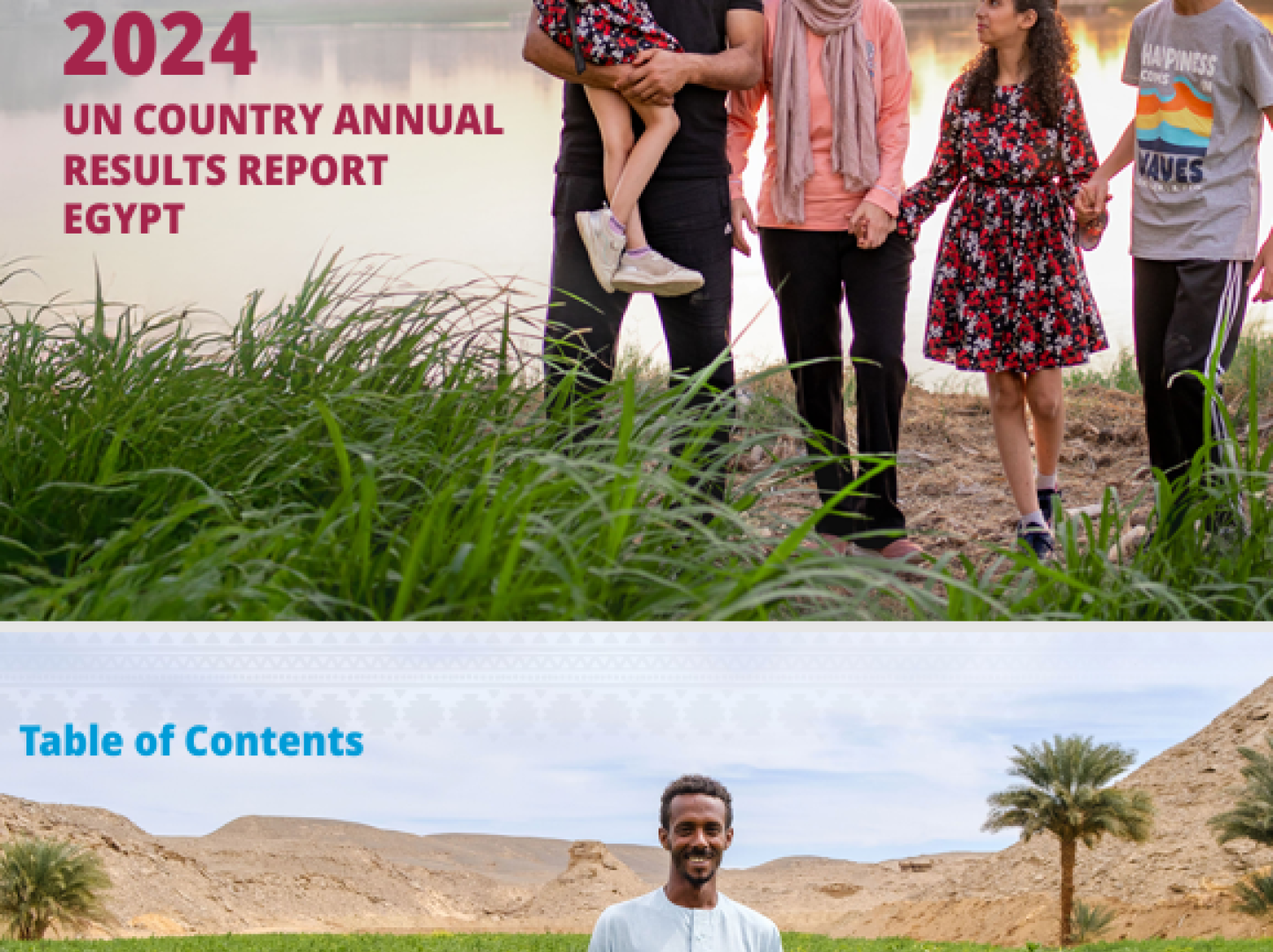
Latest Resources
1 / 11



1 / 11