

Latest
Press Release
27 August 2026
THE SECRETARY-GENERAL -- REMARKS TO THE GENERAL ASSEMBLY ON THE REVIEW OF UNITED NATIONS PEACE OPERATIONS
Learn more
Press Release
27 August 2026
UN chief, Red Cross renew call for rules on lethal autonomous weapons
Learn more
Press Release
19 August 2026
THE SECRETARY-GENERAL -- MESSAGE ON WORLD HUMANITARIAN DAY 19 August 2026
Learn more
Latest
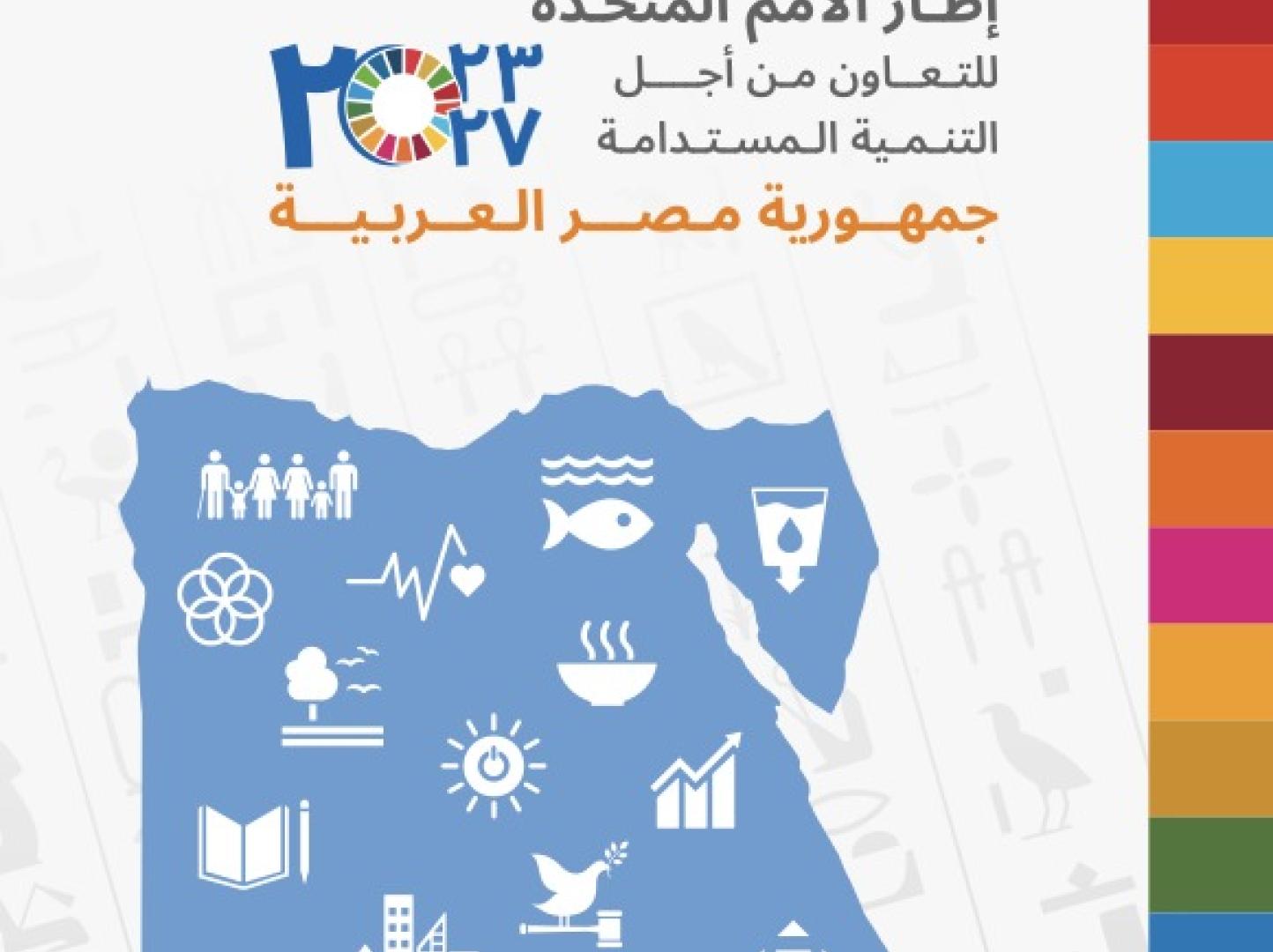
The Sustainable Development Goals in Egypt
The Sustainable Development Goals are a global call to action to end poverty, protect the earth’s environment and climate, and ensure that people everywhere can enjoy peace and prosperity. These are the goals the UN is working on in Egypt:
Press Release
24 October 2024
Egypt and the UN: foundations deeply rooted in the past and visionary insight for the future
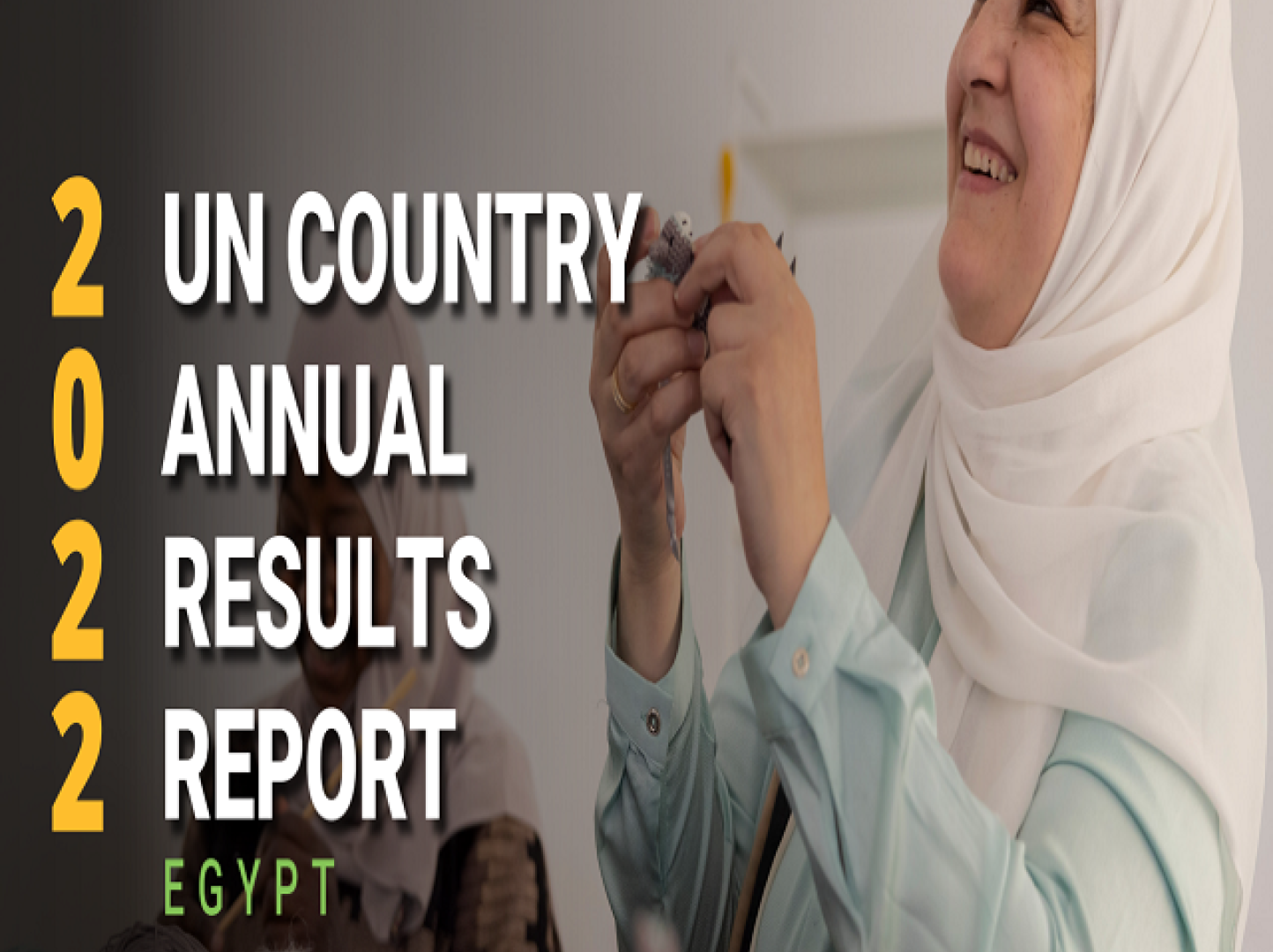
Almost a month ago, with Egypt’s participation, the Summit of the Future took place in New York, unanimously regarded as an opportunity to rebuild trust in the international multilateral system, with the UN at its heart. For us, the Pact for the Future, the Global Digital Compact and the Declaration on Future Generations – the three landmark agreements adopted by the Summit – are certainly key pillars to achieving this goal. Egypt’s active participation in the Summit reflected the country's leadership and vision on key global issues and its dedication to creating a more equitable and inclusive international system. As a strong advocate for sustainable development and financing for development, international peace and security, science, technology and innovation and digital cooperation, youth and future generations, and transforming global governance, Egypt’s voice has been crucial in shaping the outcomes of the Summit, which aimed to laying the foundation for a new global compact.Egypt seized the Summit, a once-in-a-generation opportunity, to announce its Integrated National Financing Strategy - the first in the Arab States region - as an extra mile towards achieving the Sustainable Development Goals (SDGs) and fostering economic resilience. Egypt’s efforts to integrate Artificial Intelligence (AI) across various key sectors in alignment with the SDGs were also under the spotlight during the Summit. These national development efforts were accompanied with calls for creating proper international conditions through the reform of the multilateral economic structure. As the global economy is facing multiple shocks that are reversing progress on the SDGs, with developing countries losing many of their hard-won development gains, we recognize the UN Secretary-General’s SDG Stimulus plan. Launched in 2023, this initiative requires mobilizing broad support from both developed and developing countries through scaling up financing, addressing sovereign debt burdens and lowering the cost of borrowing for developing countries. This year, Egypt held its annual flagship initiative, the Aswan Forum, which provided a vibrant and unique platform for a wide range of African stakeholders, including policy makers, private sector and civil society as well as youth representatives. The aim was to re-envision global governance and amplify Africa’s priorities on peace, security, and development towards reforming the multilateral system and strengthening the international agenda for conflict prevention and peacebuilding.The partnership between the United Nations and Egypt offers a living testament to what can be achieved when global goals meet local commitment. The UN Egypt Country Team’s Annual Results Report 2023 highlights the joint achievements, which span across sectors aligned with Egypt’s development priorities. It’s a longstanding partnership that plays a vital role in implementing the SDGs. Together, we are advancing national priorities that align with these goals, such as our collective efforts to ensure strengthened human capital with a focus on children and youth as well as inclusive and environmentally sustainable economic development across all areas of the United Nations Sustainable Development Cooperation Framework (UNSDCF) 2023-2027.Also, in a few weeks, in November, we will see Egypt host the 12th edition of the World Urban Forum (WUF12), a chance to collectively develop solutions for making cities more inclusive, resilient, and sustainable. All these initiatives give more space for us to work jointly towards achieving more equitable and sustainable future. It is through such collective spirit and action that we can address complex global issues and ensure that no one is left behind. This is exactly the goal of our collaboration on local development projects and initiatives. We have been joining forces over the years to achieve tangible benefits for millions of people, ranging from addressing poverty and climate resilience to advancing women's empowerment and youth employment.Thus, we can’t but emphasize the necessity of upholding the principles and purposes of the United Nations, especially regarding the right of all peoples to self-determination, and through the peaceful resolution of international conflicts. In the Arab world, the Middle East, and the African continent, we are in a dire need of implementing all United Nations resolutions, which are the resolutions of international legitimacy. We rely on the rules of international law and international humanitarian law, which must be respected, everywhere, by all parties.On this United Nations Day, let’s all come together in the spirit of multilateralism. Our shared future depends on our ability to cooperate, innovate, and act with urgency. The challenges we face are significant, but we also have both promising potential and rock-solid resolve. By working together, we can achieve the peace, prosperity, and dignity that we all seek. Across the world, the United Nations will continue to serve as a beacon of hope and solidarity, a voice for the voiceless, and a catalyst for progress. Together, we can build a better, more equitable world for all. Our common Future depends on all of us, women and men.
1 of 3
Story
12 August 2025
Panova: New National Youth and Sports Strategy Reflects Egypt’s Commitment to Sport as Driver of Development
The United Nations Resident Coordinator in Egypt, Elena Panova, said that the launch of the National Youth and Sports Strategy by Egypt’s Ministry of Youth and Sports reflects the government’s commitment to sport “as a cultural force and as a driver of national development, and as a catalyst for empowerment, inclusion, and opportunity.”The statement came during the launch of the National Youth and Sports Strategy (2025–2032) at a ceremony held in the New Administrative Capital under the patronage of Prime Minister Mostafa Madbouly, in partnership with the United Nations system in Egypt, and coinciding with the celebration of International Youth Day on August 12. During the event, Minister of Youth and Sports Dr. Ashraf Sobhy presented the new strategy, which aims to promote youth and sports development through investment in human capital, supporting smart economic contributions, and achieving sustainable development. In her address to an audience that included young participants; Minister of Education and Technical Education Mohamed Abdel Latif; Amal Ammar, President of the National Council for Women; UNFPA Representative in Egypt Yves Sassenrath; UNICEF Representative in Egypt Natalia Winder Rossi; and other representatives from ministries, UN agencies, and government entities, Panova said:“In Egypt, sport is a source of unity, identity, and ambition. Egypt’s new strategy embraces this reality. It positions sport both as a cultural force and as a driver of national development… This is a statement of intent that Egypt sees its young people, not only as the promise of tomorrow, but already as active contributors to the progress of today.” Noting that nearly 60% of Egypt’s population is under the age of 30, Panova said the country has “a huge demographic potential” and with it “a responsibility to ensure every young person has the chance to learn, to work, and to thrive… One powerful way to unlock that potential is through sport as a catalyst for empowerment, inclusion, and opportunity.”She highlighted that the strategy’s distinguishing feature is the way it was developed — through “a truly national conversation led by the Ministry of Youth and Sports: over 21 workshops in 11 cities, more than 10,000 young people surveyed, and over 400 concrete measures proposed.” “This is policy made with youth, not just for youth. It builds on the strong partnership between the United Nations and the Government of Egypt to make sure young people’s voices are not only heard but acted upon,” Panova said.She pointed to the UN’s belief that meaningful, diverse, and effective youth participation — inside the UN and beyond — is essential to achieving the Sustainable Development Goals. Panova referred to the Shabab Balad initiative, through which Egypt is part of the UN’s global Generation Unlimited movement to connect every young person to education, employment, and empowerment; and the UN in Egypt’s Youth Advisory Board, which ensures that young women and men contribute to shaping UN strategies, programmes, and decisions at every level. Panova said the UN’s priorities for youth — including skills development, decent work, civic engagement, and digital innovation — are closely aligned with Egypt’s national vision for its young people. She cited tangible results from joint work, noting that “in 2024 alone, more than 364,000 people — most of them young — gained new skills through UN-supported programmes.” She added that community coach initiatives are empowering young women to become local champions in sport and social innovation, while across Egypt, young entrepreneurs are leading green growth projects ranging from agribusiness to smart green ventures. Panova reaffirmed the UN’s commitment to working “for and with” young people, ensuring that collective actions are guided by their perspectives and energy. For his part, Yves Sassenrath, UNFPA Representative in Egypt, said: “Youth are not a side agenda; they are the agenda. UNFPA is proud to support Egypt’s new National Youth and Sports Strategy, shaped by more than 10,000 young voices—this is their platform for leadership. UNFPA is also proud to work hand in hand with the Government of Egypt in its efforts to ensure that every young woman and man has the skills, health, and rights that enable them to lead change.”UNICEF Representative in Egypt and Co-Chair of the UN Egypt Youth Taskforce, Natalia Winder Rossi, said: "Real change starts close to home—in classrooms, playgrounds, and communities where young people shape the future. Egypt’s new strategy puts youth at the heart of progress, and the UN stands with them every step of the way."The new strategy is built on four main pillars: the comprehensive development of youth and adolescents; promoting sport as a lifestyle; developing competitive sports and creativity; and improving governance in the youth and sports sectors.
1 of 3

Story
02 July 2025
UN's Panova says Egypt deeply committed to placing food systems, food security, and nutrition at heart of national development priorities
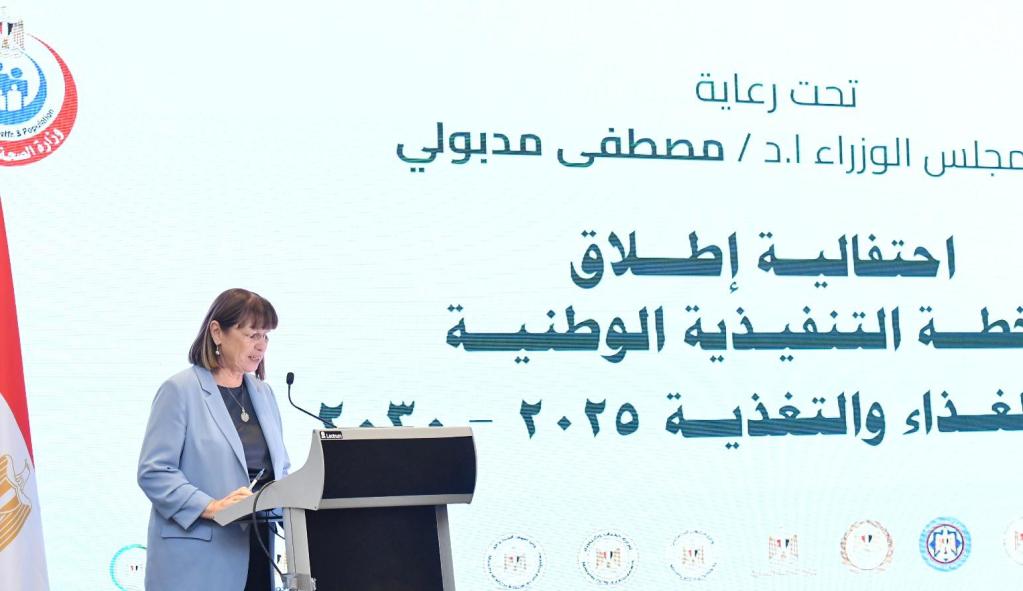
Elena Panova, the United Nations Resident Coordinator in Egypt, stated that the launch of the National Operational Plan for Food and Nutrition Systems 2025–2030 and the Roadmap to Accelerate Anemia Reduction in Egypt reflects the country's deep and sustained commitment to putting food systems, food security, and nutrition at the core of its human capital development agenda—and making them an essential component of its national development priorities.In a speech delivered on behalf of the United Nations Country Team in Egypt, Panova described the National Operational Plan as a transformational, evidence-based, multisectoral effort. She emphasized that transforming food systems and improving nutrition outcomes is a shared national endeavor requiring broad collaboration across sectors to maximize impact. Panova noted that the launch follows a series of major national strategies and investments, including Egypt’s National Food and Nutrition Strategy (2022–2030), the recently launched National Stunting and Malnutrition Prevention Program, the Takaful and Karama Program, the “First 1,000 Days” initiative, and the Egyptian Code of Marketing Breastmilk Substitutes and Baby-Friendly Health Facility accreditation. She called these programs “clear expressions of Egypt’s progress and ambition.”She described the Anemia Reduction Roadmap as a wise investment for Egypt, noting that every $1 invested in reducing anemia could generate up to $12 in economic returns. The roadmap, she added, will improve the health of pregnant women and their children and could also enhance academic performance among students.“We view both the National Operational Plan for Food and Nutrition Systems and the Roadmap to Accelerate Anemia Reduction not only as means to improve food and nutrition security but as levers for broader social and economic outcomes,” Panova said. "Economic prosperity, social cohesion, and national resilience begin with a food ecosystem that is not only nutrition-sensitive but also addresses inequities and reduces gaps by reaching the most vulnerable population groups, including women, children, the elderly, and others,” she added.Panova presented four critical enablers to ensure the successful implementation of the plan:Strong multisectoral coordination mechanisms to ensure alignment and convergence across all sectors and systems—health, agriculture, education, and social protection.Robust accountability and monitoring frameworks to track progress, promote transparency, and drive continuous improvement.Investment in data systems and evidence generation, enabling timely and informed policy decisions and effective scaling of successful approaches.Sustainable financing and capacity development, ensuring national ownership and long-term resilience of systems.In conclusion, Panova affirmed the United Nations’ strong commitment to supporting these enablers—whether through technical assistance, policy guidance, institutional capacity building, or innovation and knowledge exchange.
1 of 3
Story
21 May 2026
UN Agencies Spotlight Food Security, Industrial Development, and Child Protection Priorities in Egypt
The United Nations Information Centre Cairo organized the first United Nations media briefing of 2026 for UN agencies in Egypt on 21 May 2026, bringing together representatives from World Food Programme (WFP), United Nations Industrial Development Organization (UNIDO), and United Nations Children's Fund (UNICEF) to highlight key humanitarian, development, industrial, and child protection priorities in Egypt. During the briefing, Ms. Rawad Halabi, Representative and Country Director of WFP Egypt, discussed the growing impact of global geopolitical shocks on food security, including disruptions affecting fuel, fertilizer, and food supply chains. WFP also highlighted its cooperation with the Ministry of Agriculture to promote climate-smart agricultural practices across 120 villages under the “Haya Karima” initiative, benefiting nearly 750,000 farmers through training programmes, improved seeds, and solar-powered irrigation systems. Ms. Halabi emphasized the importance of strengthening resilience, supporting vulnerable communities, and investing in sustainable food systems. Mr. Mohamed Salama, Media and Communications Officer at UNIDO Egypt, together with Mr. Ahmed Kamal, National Project Coordinator, presented several initiatives aimed at strengthening food security and industrial competitiveness. UNIDO announced the organization of the “FoodGuard Global Summit,” scheduled to take place from 1 to 4 June 2026 at Al Manara International Conference Center in Cairo, with the participation of regional and international experts specializing in food safety and food security.UNIDO also highlighted progress under the Tomato Value Chain Project, including the establishment of the Tomato Learning and Services Center (TLSC) at the Faculty of Agriculture, Alexandria University, aimed at promoting innovation, food safety, technology transfer, and value-added agro-industrial production. In addition, updates were shared on the European Union-funded programme supporting trade, industry, growth, and rapid market access, which aims to strengthen industrial policies, enhance quality infrastructure, and support industrial clusters across several governorates, including textiles, dates production, medicinal and aromatic plants, and honey production.In the closing session, Ms. Salma El Fawal, Child Protection Programme Manager at UNICEF Egypt, addressed the issue of protecting children in the digital environment, highlighting the growing risks and challenges facing children online, including cyberbullying, digital exploitation, and harmful online content. UNICEF emphasized the importance of raising digital awareness and strengthening child protection systems, as well as enhancing cooperation among institutions, families, educators, and the technology sector to ensure a safer digital environment for children. The organization also stressed the importance of legislation, awareness campaigns, digital literacy, and survivor support services as part of a comprehensive approach to protecting children in digital spaces.
1 of 5

Story
09 April 2026
Between Two Dreams: Ethar’s Journey from Hospitality to Journalism
At 20 years old, Ethar carries more than one identity, and more than one dream. A Sudanese refugee born and raised in Egypt, she grew up navigating life much like any other young girl in Cairo: school mornings, homework, friendships, and family responsibilities. As the eldest of four sisters, Ethar learned early what it meant to lead.“I’m more Egyptian than Sudanese,” she says with a smile, reflecting on her childhood. “All my school years were in Egyptian public schools. Egypt is the only home I’ve ever really known.” For years, her life followed a familiar rhythm. Then came the moment that changed everything.Ethar remembers clearly the day she heard about a scholarship opportunity jointly offered by UNHCR and the Sawiris Foundation, a chance to study at the German Hotel School in El Gouna. It felt distant at first, almost unreal.“I approached UNHCR’s education implementing partner, where the interview took place,” she recalls. “I didn’t know what to expect. When I got accepted, it was a very mixed feeling, happiness, excitement, but also fear.Leaving home for El Gouna was Ethar’s first true step into independence, and not everyone was convinced she was ready.“My father was very supportive,” she says. “But my mother thought I wasn’t independent enough to embark on this journey. She was worried, like any mother would be.”Those doubts faded quickly. From the moment Ethar started school, something clicked.“The moment I started, I loved everything,” she says, her voice softening. “The people, the curriculum, the environment, everything.”Even now, two years after graduating, the memories still overwhelm her.“I have tears in my eyes every time I remember the friends I made and the days we shared together,” she says. “It wasn’t just a school. It was a life.”After graduation, Ethar spent two years working at a five‑star hotel in El Gouna, gaining experience and confidence in the hospitality industry. On paper, she was thriving. But inside, another dream refused to fade.“Even though I studied hospitality, I couldn’t forget my passion for journalism,” she says. “Maybe it’s because of my late father, I don’t know, but from a very young age, I dreamed of becoming another Rya Abi Rashed.”Her father, a journalist, had passed away, but his influence remained deeply rooted. Journalism wasn’t just a career aspiration, it was a legacy, a connection, and a promise she had made to herself.Then one day, she found it.“I saw an announcement for a journalism school affiliated with the American University in Cairo,” she says. “The moment I read it, I knew this was the future I wanted for myself..”Today, Ethar is in her second year of journalism studies, and for the first time, she feels fully aligned with herself.“I’ve never been happier,” she says. “I finally feel that I’m a step closer to my childhood dream.”She pauses, then adds quietly, “I’m sure my beloved father, up in heaven, is proud of me.”Ethar’s journey, from public schools in Egypt, to hospitality training in El Gouna, to journalism classrooms in Cairo, is not just a story of opportunity. It’s a story of resilience, identity, and the courage to change direction without letting go of who you are.And at only 20 years old, Ethar is just getting started.
1 of 5

Story
31 March 2026
Egypt Verification Day: UN calls for collective action to safeguard trust in digital spaces
As misinformation continues to challenge societies worldwide, the United Nations is intensifying efforts to promote information integrity, media literacy, and the responsible use of artificial intelligence—an agenda brought into focus at Egyptian Verification Day in Cairo.Held on 29 March 2026 at the University of East London’s Cairo campus in cooperation with Arabi Facts Hub, the event explored how AI can be leveraged to verify news and curb the spread of false information across digital platforms.The event drew a high-profile engagement of media leaders and public figures, including National Press Authority Deputy Chairman Alaa Thabet, Head of Egypt’s Press Syndicate Khaled El Balshy, alongside prominent editors, media professionals, academics, and civil society representatives. The United Nations Information Centre in Cairo (UNIC Cairo) participated in the discussions, spotlighting UN global perspective on combating misinformation and promoting information integrity.Representing UNIC Cairo, Deputy Director Mohamed El Koossy underscored the scale of the challenge, noting that information is no longer just content to be shared, but “a powerful force shaping public perception, decision-making, and trust within societies.”He stressed that the core issue today is not access, but discernment: “The real challenge is no longer access to information, but the ability to distinguish between what is accurate and what is misleading.”A coordinated UN responseEl Koossy highlighted that the UN’s response to misinformation is anchored in global frameworks, including the Secretary-General's Policy Brief on Information Integrity on Digital Platforms and the Global Principles for Information Integrity, which aim to enhance transparency, accountability, and trust in digital ecosystems.He also pointed to the Global Digital Compact, a key outcome of the Summit of the Future, as a milestone in shaping global digital governance. The Compact addresses not only misinformation but also the risks of manipulated content and hate speech, recognizing how toxic narratives can undermine peace, public health, and social cohesion. Lessons from the “infodemic”Drawing on the COVID-19 experience, El Koossy recalled how the world faced what the UN described as an “infodemic”, where misleading information spread at unprecedented speed.“The challenge was not only the presence of misinformation, but its enormous speed and the difficulty of distinguishing between reliable and unreliable sources,” he said, emphasizing how this environment complicated decision-making at critical moments and often amplified hate speech and discrimination.This lesson continues to inform UN initiatives such as Verified, which promotes the dissemination of accurate, fact-based information and strengthens public resilience against misinformation and harmful narratives.Putting people at the centerDespite the growing role of AI, UNIC Cairo Deputy Director emphasized that technology is only part of the solution. “Combating misinformation does not begin with technology alone—it begins with people,” he said, stressing that human judgment remains decisive.He highlighted the UN’s work in Egypt to build media literacy and critical thinking skills, particularly among youth and journalists, through workshops and awareness initiatives that also address the dangers of hate speech and its corrosive impact on trust and social stability. A shared responsibilityAs discussions at Egyptian Verification Day made clear, combating misinformation requires coordinated action across sectors—from governments and media institutions to technology developers and civil society.This concern was also raised at the Egypt Media Forum in November 2025, where UN Under-Secretary-General for Global Communications Melissa Fleming warned of the toxic information environment shaped by disinformation, hate speech, and AI-driven distortion, and pointed to the UN’s Global Principles for Information Integrity as a framework for rebuilding trust.The ongoing debate in Egypt on journalism, digital governance, and information integrity highlights the need for all stakeholders—governments, media, civil society, and individuals—to work together to strengthen verification, counter hate speech, and safeguard trust, with the UN supporting collective efforts to ensure integrity remains central to the digital age.
1 of 5

Story
08 February 2026
The European Union and UNIDO Strengthen Local Production and Competitiveness in New Valley and Assiut
A high-level delegation from the European Union Delegation to Egypt, UNIDO, European embassies, and the Ministries of International Cooperation and Local Development conducted a field mission from 1 to 4 February 2026 to the New Valley and Assiut Governorates, engaging with governors, farmers, and producers to support local production and enhance the competitiveness of Egyptian products. The visit, carried out under the EU-funded TIGARA project, focused on the dates industrial cluster in New Valley and the medicinal and aromatic plants (MAPs) cluster in Assiut, with the aim of strengthening value chains, developing workforce skills, and improving access to European markets.The mission combined high-level strategic discussions with hands-on site visits. Starting with a meeting with Major General Dr. Mohamed El-Zamlout, Governor of New Valley on 1 February, and concluding with a meeting with Major General Dr. Hisham Abu Al-Nasr, Governor of Assiut on 3 February, the discussions focused on explaining how the European Union and UNIDO’s support through TIGARA project contributes to strengthening local production, enhancing the competitiveness of SMEs, and enabling access to international markets.Discussions also highlighted TIGARA’s approach to improving competitiveness through better production processes, compliance with international standards, digitalisation, and more efficient value chains. The meetings also aimed to ensure alignment with local development priorities and to secure institutional endorsement for cluster development plans. Beyond strategy, the mission placed strong emphasis on direct engagement with producers and associations. The delegation visited farms, production stations, factories, and associations involved in dates and MAPs production. Particular attention was given to the role of civil society associations, where production is largely driven by smallholder farmers. These associations act as a vital link to producers, helping translate technical support into practical solutions that reflect local traditions, capacities, and market realities.“This mission reflects the European Union’s strong commitment to trade development and investment cooperation with Egypt,” said Nikolas Zaimis, Minister Counsellor and Head of the Investment and Trade Section at the EU Delegation to Egypt. “By engaging directly with local producers in Assiut and New Valley, we are helping strengthen competitiveness and workforce capabilities so that Egyptian products can better access European markets, while also creating opportunities for EU investors. It is a mutually beneficial partnership that builds bridges between our economies and supports sustainable growth on both sides.”“Trade and cluster development are central pillars of UNIDO’s portfolio in Egypt,” said Dr. Gihan Bayoumi, the Deputy UNIDO Representative of the UNIDO Sub-Regional Hub in Egypt. “Beyond strategy, our focus is practical implementation, working hand in hand with local institutions and producers to modernise clusters, introduce digital tools, and strengthen capacities. By enabling SMEs to grow sustainably and compete in international markets, we contribute directly to Egypt’s broader economic development.” TIGARA’s cluster development plans are designed to be flexible and responsive. The site visits allowed the delegation to assess real needs on the ground, identify opportunities for value addition, and refine planned interventions across the entire value chain. “This visit creates space for meaningful technical cooperation,” said Haguer Magdi, Trade Attaché at the Embassy of Belgium in Cairo. “For Belgium, this mission highlights opportunities for partnership in priority areas such as energy, transport, water technologies and knowledge transfer.”“The Czech Republic values combining industrial modernisation with innovation and technology transfer,” said Ondřej Cuchý, Counsellor and Head of the Economic and Trade Section at the Embassy of the Czech Republic in Cairo. “Visiting New Valley and Assiut, allows closer engagement with Egyptian producers. We aim to open further channels between Czech investors and local enterprises and strengthen our bilateral trade and investment relations.”“Lithuania is keen to deepen its partnership with Egypt in ways that bring benefits to both economies,” said Darius Nevulis, the First Secretary and Head of the Political and Economic Section at the Embassy of the Republic of Lithuania. “Agriculture, energy and technology transfer are key priorities for us, and we see strong potential to expand cooperation, knowledge exchange and trade between our two countries.”Lukasz Lesniewski commented: “I participated in the TIGARA study visit as Agriculture Counsellor at the Embassy of Poland, exploring opportunities for agricultural trade, food processing, sustainability and food safety in Egypt. The visit underscored the importance of inclusive growth, within local communities. The project’s strength lies in knowledge sharing and practical solutions that improve production, marketing and market access, driven by committed entrepreneurs and local authorities.”About TIGARA ProjectThe European Union support to trade, industry, growth and rapid market access (TIGARA) is a project funded by the European Union and implemented by the United Nations Industrial Development Organization (UNIDO / UNIDO Egypt) in partnership with the Egyptian Ministry of Planning, Economic Development, and International Cooperation, Ministry of Industry, and Ministry of Investment and Foreign Trade. Our mission is to drive trade growth and support Egypt's economic development through a focus on export orientation and enhanced competitiveness of the industrial sector.
1 of 5

Story
08 February 2026
As Egypt marks the International Day of Family and Peace, UN reaffirms support for inclusive health and social protection
Cairo - Celebrating the Yearlong International Day of Family and Peace, the Government of Egypt, led by the Ministry of Health and Population, convened national and international development partners to spotlight families as the foundation of social cohesion, wellbeing, and sustainable development, with the United Nations reaffirming its full commitment to working hand in hand with national and development partners to strengthen health services and support communities across the country.Attended by Dr. Khaled Abdel Ghaffar, Deputy Prime Minister and Minister of Health and Population and Elena Panova, the UN Resident Coordinator in Egypt, the event brought together government officials, health and social sector leaders, faith figures, and development partners to examine how family empowerment, child protection, and accessible health services contribute to peaceful and resilient societies—particularly amid growing demographic pressures and regional displacement. Discussions highlighted Egypt’s ongoing efforts to strengthen primary health care as a cornerstone of family wellbeing, with a focus on maternal, child, reproductive, and psychosocial health. Government speakers emphasized reforms aimed at expanding access, improving quality, and investing in the health workforce as part of a broader human development agenda.A dedicated session addressed the needs of migrants, refugees, and other displaced populations, reflecting Egypt’s role as a major host country. The session brought together the representatives of UNICEF, UNFPA, WHO, UNHCR, IOM, ILO, and WFP, underscoring the United Nations’ coordinated approach to supporting national systems across health, protection, nutrition, migration, and livelihoods—while reinforcing social cohesion between host communities and newcomers.In her keynote remarks, Elena Panova, United Nations Resident Coordinator in Egypt, stressed that peace begins within families and communities, and that health must be upheld as a right for all who reside in the country. She welcomed the Government of Egypt’s launch of the “Dyofna” (“Our Guests”) Initiative, describing it as a forward-looking step to expand access to essential health and psychosocial services for migrants and refugees, while strengthening women’s empowerment and social cohesion. She also highlighted the Joint Programme for Migrants, Refugees and Host Communities, supported by the European Union and implemented under Egypt’s National Joint Platform, as a flagship example of nationally led cooperation that bridges humanitarian response and long-term development.“Over the past year, this partnership has delivered tangible results,” Panova said. “Working hand in hand with the Ministry of Health and Population, the UN has refurbished and equipped 34 public healthcare facilities, delivered over 12,000 rapid diagnostic tests and vaccines, and trained 1,729 healthcare practitioners—significantly enhancing Egypt’s health system’s capacity to meet growing demands.” Building on these achievements, she stressed the need for continued investment: “With arrivals continuing to rise, we must scale up the Programme to ensure quality services remain resilient, accessible, and responsive for all communities. Together, we can protect families, empower communities, and leave no one behind.”As Egypt continues its yearlong observance of the International Day of Family and Peace, the event reaffirmed a shared commitment to building inclusive systems that protect families, uphold dignity, and strengthen social cohesion across the country.
1 of 5

Press Release
27 August 2026
UN chief, Red Cross renew call for rules on lethal autonomous weapons
The timing of the appeal reflects growing concerns that increasingly sophisticated weapons are being made and deployed at ever greater speed and scale, boosted by increasingly powerful AI technology. Disarmament experts say that even arms manufacturers want clarity on the legal issues at stake.“We are now dangerously close to crossing a moral red line: the autonomous targeting of humans by machines,” UN Secretary-General Guterres said, in a joint appeal with International Committee of the Red Cross (ICRC) head Mirjana Spoljaric Egger.Targeting civilians and civilian infrastructure in conflict is already strictly prohibited under international humanitarian law, but understanding who non-combatants are in a conflict zone is often extremely difficult. The concern is that life-and-death decisions will be taken by machines unable to tell the difference in changing conditions.Legal and ethical principleEchoing those concerns in Geneva, head of disarmament affairs at UN Geneva, Mélanie Régimbal, stressed that the UN chief’s long-held position that systems that select or engage targets and take human lives without human control and judgement “are politically unacceptable, morally repugnant and should be prohibited under international law”.Also in Geneva, ICRC’s Laurent Gisel described how conflict “is not a story of precision, distinction and restraints. It is a story of civilians killed, families displaced, hospitals, schools and homes destroyed at ever greater speed and scale."In such a setting, “things can change very rapidly”, explained Mr. Gisel, Head of Arms and Conduct of Hostilities Unit at ICRC. “A combatant can surrender or be wounded and therefore be protected from attack; civilians can enter the area of operations of the autonomous weapons systems; the weapons may encounter a situation that would not have been anticipated.”In the appeal, Mr. Guterres and Ms. Egger noted that autonomous weapons were “not part of a distant future”, as the race towards greater autonomy is already underway. Scientists and engineers developing such systems had also raised concerns about their risks, they noted.Tweet URL States urged to actThe UN and ICRC are now urging governments to move beyond discussions and begin negotiations on a legally binding instrument establishing clear prohibitions and restrictions.“States must show political courage and move beyond incremental discussions towards decisive action,” they said, warning that failure to act could leave future generations with a world where accountability for lethal decisions becomes increasingly difficult to establish.The appeal comes ahead of the seventh Review Conference of the Convention on Certain Conventional Weapons (CCW), due to take place in November in Geneva. The leaders of the UN and Red Cross described the meeting as the “clearest path available” for States to agree to move towards negotiations on a legally binding instrument.Important groundwork for an agreement has already been laid through discussions at the UN General Assembly and the CCW’s Group of Governmental Experts, they said, including progress towards defining the human judgement and control needed to ensure compliance with international humanitarian law.The UN and ICRC first issued their joint appeal in 2023, calling on States to negotiate a legally binding instrument by 2026. Their initial statement stressed that human control must be retained over life-and-death decisions and that machines capable of taking lives without human involvement should be prohibited under international law. Tuesday’s appeal renews that deadline-driven push, stressing that the painstaking work of recent years must now lead to action.“We urge States to seize this moment,” the leaders said. “Innovation must serve humanity – not endanger it.”The joint appeal is for two types of autonomous weapons to be prohibited:Unpredictable autonomous weapons; those that either by design or during use, the operator cannot predict or anticipate the outcome of force being used. “If it's not possible to predict it, then how is it possible to limit it?” asked ICRC’s Mr. Gisel.Anti-personnel weapons: although "all States" have acknowledged that autonomous weapons in general raise ethical questions because there is less control on the use of force, concerns are highest over those that deliberately target a human being "because that reduce human life to data, algorithm, sensor and machine operations", the ICRC expert stressed.
1 of 5
Press Release
27 August 2026
THE SECRETARY-GENERAL -- REMARKS TO THE GENERAL ASSEMBLY ON THE REVIEW OF UNITED NATIONS PEACE OPERATIONS
Madam President,Excellencies, United Nations peace operations are a critical form of multilateral action. They help defuse crises, stop conflict, sustain ceasefires, and protect civilians. In lands stained by bloodshed, they create space for dialogue and open pathways to peace. By supporting peace processes. Advancing the implementation of negotiated settlements. Accompanying complex political transitions. And laying the foundations for long-term recovery. UN missions have helped consolidate peace from Cambodia to El Salvador, from Timor-Leste to the Central African Republic, and beyond. Our work on the border dispute between Cameroon and Nigeria is another case in point. Through the good offices and peacemaking, we helped the parties find common ground on how to implement the ruling of the International Court of Justice. Later, we deployed a special political mission that helped demarcate the boundary and ultimately end the border dispute. Our approaches to peace operations have evolved over the past eight decades, as conflicts changed [and] possibilities for collective action fluctuated. Now they must adapt again to dramatic new realities. Geopolitics is in flux. Power is more diffuse and worldviews are more diverse. New poles of influence are emerging. And new lines of contestation are taking shape. We are witnessing a resurgence of conflict between states. And an intensification of internal conflicts — now increasingly internationalized, more protracted, and harder to resolve. The number of conflicts is at the highest level since 1945. And [the] human cost is mounting, with more battle-related deaths in the last five years than in the twenty-five before. Meanwhile, the nature of conflict is rapidly changing. We see the increasing military use of drones and the looming prospect of autonomous lethal weapons, powered by artificial intelligence. The growing involvement of transnational criminal networks. A wider range of State and non-state actors getting their hands on deadly technologies. The renewed threat of nuclear weapons. The frequent targeting of civilians and civilian infrastructure. And a mounting sense of impunity, as parties violate international law and States ignore their Charter obligations. At the same time, comprehensive peace agreements are less common. The share of conflicts settled through a peace agreement is the lowest in decades. Excellencies, These developments present new challenges and place new demands on United Nations peace operations. Over the past three decades, our missions were deployed primarily to support conflict parties in reaching and implementing a comprehensive peace agreement after a civil war. But today such frameworks are increasingly rare, harder to achieve, and more fragile. All too often we see political negotiations stall, violence flaring up, civilians attacked, and peace operations targeted. And while missions are asked to contain the consequences of conflict, the parties themselves face little pressure to resolve it — and sometimes external actors even contribute to the continuation of conflicts, as we see in Sudan. Geopolitical polarization has eroded consensus about when to deploy peace operations, what they should and should not do, and what constitutes success. Member States increasingly differ not only on how to respond to threats to peace, but on how those threats should be understood in the first place. This can result in mandates that lack sufficient clarity and missions that lack unified support. We have also seen peacekeeping budgets slashed, and the number of peacekeeping troops and police officers greatly reduced. In the Pact for the Future, Member States called on me to conduct a review on the future of all forms of UN peace operations and how they can adapt to enable more agile and tailored responses to existing, emerging, and future peace and security challenges. The report of that review has now been circulated to all Member States, and I am pleased to share some comments today on its findings and recommendations. The review draws on extensive consultations with Member States, our missions, the wider United Nations system, regional partners, and civil society. Throughout these discussions, we heard a crystal-clear refrain: UN peace operations are indispensable tools for maintaining international peace and security — but to be more effective, they must adapt to new realities. The review considers, for the first time, the full spectrum of United Nations peace operations. This includes a diverse set of special political missions: The small office of a special envoy working to broker peace in Sudan. A regional office with a preventive diplomacy mandate helping address cross-boundary threats in Central Asia. Sanctions panels providing the Security Council with information on compliance to [the] measures it imposes, such as against ISIL, or Da’esh, or Al-Qaida. A mission with the Organisation for the Prohibition of Chemical Weapons to rid Syria of these senseless tools of terror. And a broadly mandated mission seeking to promote political unity and a roadmap to peace in Libya. It also addresses different types of peacekeeping operations: Missions monitoring ceasefires or the separation of conflict parties, from Cyprus to the Middle East; And multi-dimensional operations working to ensure stability, support political processes, and protect civilians, as in the Democratic Republic of the Congo or South Sudan. This spectrum is rich and adaptable. It provides a wide set of tools for the Security Council to draw from as it confronts each situation. The review recalls the lessons of our past work, our previous reviews, and our reform processes. And it reaffirms the principles and considerations that guide UN peace operations across diverse settings. These include clearly defined outcomes. Pursuit of political solutions. Stronger partnership with host States. Impartiality and respect for the Charter and international law. Shared responsibility among Member States. Closer cooperation with regional organizations. And a whole-of-UN response to help sustain peace. The review also highlights the need for agile, tailored responses. And crucially, it calls for a reset in how we think about and use peace operations. Let me outline what this reset requires. First, a sharper focus on peacemaking. That means renewed emphasis on preventive diplomacy, peacemaking, and the pacific settlement of disputes. And it means strengthening the good offices of the Secretary-General, her or his envoys, and the Secretariat. We have seen in Colombia, for example, how our good offices engagement supported the peace process, helped usher in the peace agreement, and paved the way for a dedicated special political mission to support the parties with its implementation. All of our peace operations, and the political processes they are designed to support, require the strong and unified backing of UN Member States. The Secretariat, in turn, must actively work to bridge differences and support the Security Council and Member States in building a greater common understanding of the challenges and the options available to address them. Peacemaking is a core task of most peace operations, but it is not the work of missions alone. We must make better use of [the] expertise and capacities we already have at Headquarters and deploy them to support peace processes and open political space. For example, as part of my UN80 initiative, our special political missions supporting the Geneva International Discussions and the Cyprus good offices work have been reconfigured to achieve a leaner and more cost-effective structure, with more direct support from Headquarters. We must also make fuller use of our special political missions with regional mandates and consider how to expand the existing network of regional offices and envoys. Their presence can engage early, work closely with regional organizations, and help prevent disputes from escalating into wider conflicts, including between States. But let’s be honest: No peace operation, and no political process supported by the United Nations, can succeed without solid and cohesive support from Member States. Second, stronger partnerships with host States. Peace cannot be brought in from abroad. It must be built from the ground up — through close cooperation with host States. Peace operations can only be effective if their mandates support the national actors who ultimately hold the key to sustainable peace. The review outlines ways to strengthen these partnerships, including through structured consultations among the Security Council, host States, troop- and police-contributing countries, and the Secretariat. Together, we must build a shared vision of what each mission can achieve throughout its life cycle. Third, focused and adaptable mandates. It’s time to match our ambitions with reality. Peace operations should be focused on areas where they hold a clear, comparative advantage — particularly politics and security and, where mandated, the protection of civilians. Missions must also remain responsive to realities on the ground. When circumstances change significantly, mandates must evolve accordingly. The Secretariat has an important role to play in helping the Security Council ensure missions are adaptable. This includes providing regular and frank assessments of how missions are delivering on their mandates. Proposing options for better aligning their mandates with realities on the ground. And presenting transition plans and exit strategies where appropriate. This must be planned early, and updated regularly, to ensure that gains are consolidated. I am encouraged by progress made in prioritizing mandates, and I thank the Security Council for its efforts on this front. But let me be clear: Peacekeeping operations should only be deployed when a peace agreement or at least a robust ceasefire is in place. We cannot keep peace when there is no peace to keep. And, so, fourth, a clear division of labour. Helping societies move from war to peace is one of the toughest tasks we face. It requires the full and sustained engagement of the wider United Nations system and the international community. And it requires peace operations to work hand in hand with the broader UN country team, drawing on each entity’s strengths and avoiding duplication. In certain cases, mandated tasks can be better delivered by agencies, funds, and programmes with the relevant expertise and presence. This networked approach builds on my UN80 report — Shifting Paradigms: United to Deliver — in calling for other UN entities, where possible, to lead programmatic work for which they are best equipped. Beyond improving mandate delivery, this will make mission transitions smoother and more sustainable — for example, when mandated tasks need to be handed over to the host State and to the UN country team. Fifth, more agile operations. To be truly agile, peace operations must be supported by flexible administrative frameworks, clear chains of command, and stronger planning and operational processes. And they must preserve one of our greatest strengths: a skilled, diverse global workforce. That means protecting the progress we have made and accelerating the meaningful participation of women across all aspects of UN peace operations. Sixth, greater cost-efficiency and accountability. Responsible stewardship of resources is essential. But delivering on our commitment to efficiency and effectiveness across all peace operations requires a sharper focus on impact and results. And we must continue to hold all personnel fully accountable for their conduct and performance — at all times and without exception. The world’s most vulnerable people have placed their trust in the United Nations. We must keep earning that trust every day — and never betray it. Seventh, readiness and technological capability. Member States have made it clear they expect the UN to act swiftly and deploy tailored responses across the full spectrum of peace operations. Our readiness to deliver requires sustained, collective investments in our civilian and specialized uniformed capacities. We must preserve and maintain the UN’s hard-won experience and expertise, and capabilities in the service of peace. We must also strengthen the preparedness and resilience of our missions. By closing our technology and capability gaps. Exploring options for more mobile mission configurations. And insisting on the safety and security of our field personnel. I commend the dedication and courage of all who have served in UN peace operations. I honour our dear colleagues who have given their lives in the pursuit of peace. And I welcome the wide co-sponsorship and unanimous adoption of Security Council resolution 2823. Attacks against UN peacekeepers must stop, and perpetrators must be held to account. No impunity. No exceptions. Our civilian staff, too, often work under significant threats. Just last week, we marked the anniversary of the Canal Hotel bombing in Baghdad, in which 22 staff serving in our special political mission in Iraq were killed in 2003 – a poignant reminder of the sacrifices made in our work for peace. Finally, stronger global-regional partnerships. The review recognizes that we support and operate within a much larger ecosystem of actors, each with distinct mandates and comparative advantages. Effective networked multilateralism depends on strong partnerships, and the United Nations–African Union partnership is a prime example. Security Council resolution 2719 established a framework for predictable financing of AU-led peace support operations authorized by the Council through assessed contributions. It is essential for Council Members to reach agreement on materializing this landmark commitment. And in some circumstances, peace enforcement operations led by regional organizations or coalitions of the willing might be justified. Under Chapter VII of the UN Charter, peace enforcement may involve a range of coercive measures, including military force, undertaken with the authorization of the Security Council to maintain or restore international peace and security. Unlike UN peace operations, enforcement action does not necessarily require the strategic consent of the conflict parties. But all such efforts should be embedded in a comprehensive approach that prioritizes political solutions, addresses conflict drivers and grievances, and is anchored in a national commitment toward durable peace. And there must be full compliance with the UN Charter and international humanitarian and human rights law, and accountability to the Security Council. Without safeguards, securitized responses could reinforce the very dynamics they seek to overcome. The Secretariat is ready to support these safeguards and provide the necessary expertise and political [and] technical assistance. Regarding peace enforcement operations, in some circumstances UN missions can provide a range of support building on our past experiences. Madam President, Excellencies, The United Nations Charter provides the foundation for collective action. Over decades, Member States have built and adapted a diverse array of peace operations to meet evolving challenges. But peace operations are, above all, political instruments. Their success depends on how well their mandates are suited to needs on the ground, the will of the parties, and the level of political support from the Security Council and Member States. Lasting impact requires Member States, the United Nations, the host country, and international partners to work together in a spirit of shared responsibility and common purpose. I urge Member States to draw on this review as they consider options for adapting UN peace operations. To advance its recommendations in relevant intergovernmental bodies. And to invest in peace. Excellencies, I express my sincere gratitude to Member States for supporting this review process. And I thank you for helping to make UN peace operations more effective, cost-efficient, and more impactful. We must adapt to a changing world. And together, we must find the will — and the resources — to forge pathways to peace. Thank you.
1 of 5
Press Release
19 August 2026
THE SECRETARY-GENERAL -- MESSAGE ON WORLD HUMANITARIAN DAY 19 August 2026
We also confront an appalling truth: Serving others has become more dangerous than ever. More than a thousand humanitarians have been killed in the last three years. Most were local staff supporting their own communities. Countless others narrowly survived being shot at, shelled, bombed, kidnapped, or raped. Schools and hospitals are coming under fire. And new tools of war – including armed drones – are posing fresh risks. At the same time, disinformation is eroding trust. Humanitarian funding is being cut. And humanitarian access is being restricted. We see aid convoys blocked. Aid workers threatened, arrested, and detained. And people in desperate need left without support. Attacks on humanitarian workers are illegal. And the consequences are devastating. For families struggling to survive. Children waiting for food. Patients seeking urgent care. And so many more. The world has made commitments. Now it must act: To respect the rules of war; Ensure safe access; Hold perpetrators accountable; And provide sufficient resources. Humanitarian workers stand up for people in need. We must stand up for them. We must act for humanity – now. ***
1 of 5
Press Release
12 August 2026
Egyptian Ministry of Justice, UNODC and UN Women Collaborate to Enhance National Mechanisms for Access to Justice for Women and Girls Victims of Violence
This roundtable was organized within the framework of the collaboration between UNODC ROMENA and UN Women Egypt as part of ongoing efforts to promote gender-responsive justice and strengthen national capacities to provide effective, accessible, and victim-centred services.The event was opened by Judge Saly El Seaidy, Assistant Minister of Justice for Human Rights, Women and Child Affairs; Ms. Marwa AlamEldeen, Officer-in-Charge of the UN Women Egypt Country Office; and Ms. Cristina Albertin, UNODC Regional Representative for the Middle East and North Africa. In their remarks, they reaffirmed the shared commitment to strengthening institutional cooperation, enhancing protection mechanisms for women and girls affected by violence, and improving the responsiveness of the justice system.Judge Saly El Seaidy, Assistant Minister of Justice for Human Rights, Woman and Child Department highlighted: “Protecting women from violence is not just a legal response to an incident that occurred, but rather an integrated system that begins with prevention, goes through protection, and ends with fairness, reparation, and ensuring that the assault is not repeated”Ms. Cristina Albertin, UNODC Regional Representative for the Middle East and North Africa, emphasized: "Violence against women and girls remains one of the most widespread human rights violations globally. Addressing it requires justice systems that are accessible, responsive, and centred on the needs of survivors. This roundtable represents an important step in the longstanding partnership between UNODC, the Ministry of Justice and UN Women to advance comprehensive responses to VAW&G through stronger institutions, enhanced judicial capacities, and coordinated service delivery.Mrs. Marwa AlamEldeen, Officer in Charge UN Women Egypt Country Office stated: “Justice does not begin with court orders, but rather from the first moment a woman resorts to the law to seek protection. Trust in the judiciary is not built on laws and texts alone, but on the ability of the justice system to be accessible, fair, efficient and responsive to the needs of all litigants”.Throughout the two-day event, participants examined international legal frameworks and United Nations standards on violence against women and girls (VAW&G), while exploring ways to strengthen legal protection, psychosocial support, institutional coordination, and referral mechanisms. Discussions drew on comparative experiences and national good practices to enhance the effectiveness and sustainability of Women Support Offices and Legal Aid Offices, which play a vital role in facilitating access to justice through guidance, referrals, and coordinated assistance. The roundtable also enabled participants to exchange insights and identify practical measures to enhance the role and mandate of these offices in line with national priorities and international standards.As part of its broader mandate to support fair, effective, and accountable criminal justice systems, UNODC remains committed to working alongside national partners to strengthen institutional capacities, promote inter-agency cooperation, and advance justice responses that uphold the rights and dignity of all women and girls.
1 of 5
Press Release
12 August 2026
The secretary-General’s Message for International Youth Day 12 August 2026
This year’s theme – “Different Contexts, Common Aspirations” – reflects a simple truth: that despite their many differences, young people across the globe share similar hopes for dignity, participation and opportunity. It also acknowledges that the toughest challenges younger generations face – most notably economic uncertainty, digital inclusion and climate change – transcend national borders and demand a coordinated response. Young people are already leading the way as organizers and innovators. But to go further, they need access to the skills that will shape the future – from critical thinking and problem-solving to digital literacy. By working with young people as equal partners, we can unlock the demographic dividend, accelerate sustainable development, and bring their energy and expertise to bear on some of the defining crises of our time. They must also be granted a greater role in decision-making processes at the local, national, and international levels. What unites the world’s young people is greater than what divides them. The United Nations stands with youth everywhere in their call for investment and inclusion. Together, let us build a present and future where every generation can thrive. ***
1 of 5
Latest Resources
1 / 11



1 / 11